Small Gates Keep AI Work Honest

The easiest way to make AI-assisted work go sideways is to give the assistant one giant permission slip.
“Make the thing.”
“Looks good.”
“Ship it.”
That sounds efficient until you notice three different decisions just got smushed into one sticky blob: what we are making, whether the thing actually works, and whether it should go public. The agent did not necessarily do anything evil. It just followed the downhill slope. Fast tools love downhill slopes.
The fix is not to slow the whole process down. That turns every task into a DMV line with a laptop. The fix is to put small gates at the places where human judgment changes the cost of being wrong.
Do not gate every keystroke. Gate the moments where a bad assumption becomes expensive.
Speed is not the problem
A good assistant should move quickly. That is the point.
It can turn a rough idea into an outline, a draft, a checklist, a test plan, a comparison, a bug hunt, or a halfway decent first pass while you are still deciding if coffee counts as a food group. Used well, that speed gives you more attempts, more options, and less blank-page staring.
The problem starts when speed hides the decision boundaries.
The assistant can write before the direction is right. It can polish before the source is true. It can build a preview before the premise deserves a preview. It can treat “nice” feedback as approval to publish. It can make a clean artifact out of a messy misunderstanding.
That is the dangerous kind of progress: lots of motion, not enough steering.
The three decisions are different
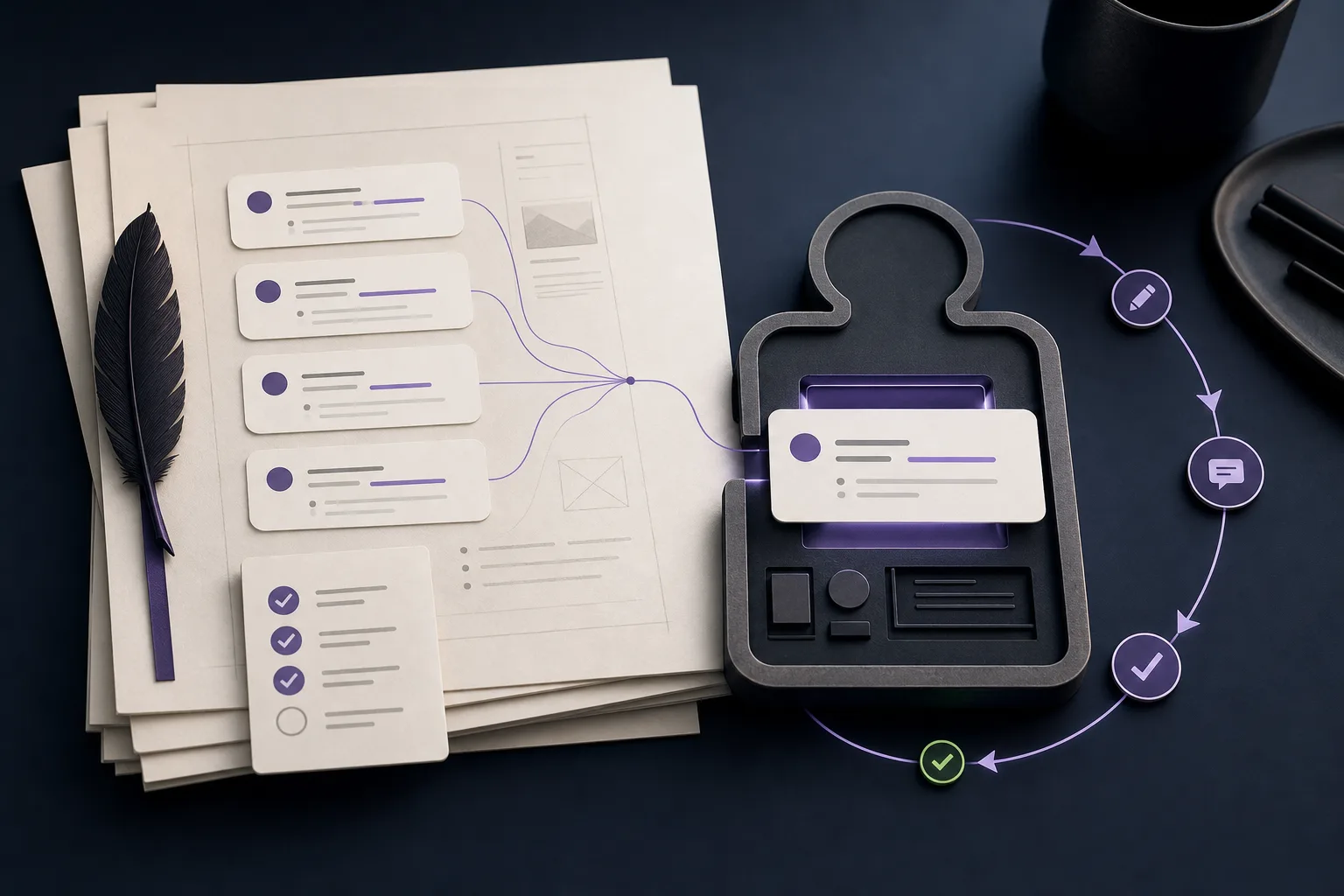
Most AI-assisted work has at least three decisions hiding inside it:
- Direction: is this the right thing to make?
- Proof: does the artifact actually work?
- Release: are we ready for other people to see or depend on it?
Those decisions should not share one rubber stamp.
Direction is about judgment before production. Who is this for? What job should it do? What is out of scope? What source material counts? What would make this worth making?
Proof is about evidence after production. Does the draft say the right thing? Does the code run? Does the page render? Did anyone check the parts that usually break? Are we looking at the artifact or just admiring the idea of the artifact?
Release is about consequences. Is this safe to publish, send, merge, deploy, announce, or hand to someone else? Has the review actually approved release, or did it only approve the content?
When those three decisions blur together, the assistant gets too much implied authority. It starts treating momentum as permission.
Small gates are not bureaucracy
Bad process asks for permission constantly because it does not trust anyone.
Good process asks for permission when the work crosses a real boundary.
There is a huge difference.
A useful gate is small, explicit, and placed at a cost change. It should answer one question. Not twelve. Not a ritual sacrifice to the spreadsheet goblin. One question.
- Direction gate: are we making the right thing?
- Proof gate: does the artifact pass review?
- Release gate: may this leave the workshop?
That is enough structure to keep the assistant honest without turning the human into a full-time hall monitor.
The assistant can still draft, revise, test, summarize, and prepare the next packet. It just cannot silently convert one kind of approval into another.
“Good direction” does not mean “good draft.”
“Good draft” does not mean “publish it.”
“Publish it” should mean exactly that, on purpose.
Gate the expensive mistakes
Not every task needs the same amount of ceremony.
If you ask for ten joke names for a side project, you do not need a governance model. Pick one, laugh, move on, regret it later like a normal person.
If the assistant is touching public copy, customer-facing material, real code, shared docs, billing language, legal-ish claims, health advice, credentials, data cleanup, or anything that will be hard to unwind, the gates matter more.
The test is simple:
- Could a wrong direction waste a lot of work?
- Could weak proof make a polished mistake look finished?
- Could premature release create public, financial, safety, trust, or cleanup cost?
If yes, add a gate there.
The gate can be lightweight. A paragraph. A checklist. A preview link. A test result. A “stop here until I approve” note. The size matters less than the separation.
Make the assistant show its work at the gate
A gate is only useful if the review surface is inspectable.
Do not ask the human to approve vibes. Ask for a review packet that shows the thing being decided.
For direction, that might be the reader, promise, outline, source boundaries, and exclusions.
For proof, it might be the draft, rendered preview, test output, screenshots, claim checks, and known gaps.
For release, it might be the final artifact, deploy scope, rollback path, live route, affected surfaces, and explicit publish wording.
The assistant should bring evidence to the gate, not just a confident summary. Confident summaries are how gremlins get badges.
This does not need to be heavy. The point is to make the decision visible enough that the human can say yes, no, reshape, hold, or release without excavating the whole session.
The human keeps the judgment
AI assistants are good at making the next step look obvious. Sometimes it is. Sometimes the “obvious” next step is just the model sprinting toward the nearest pattern match with jazz hands.
Small gates keep the human in the places where judgment matters most.
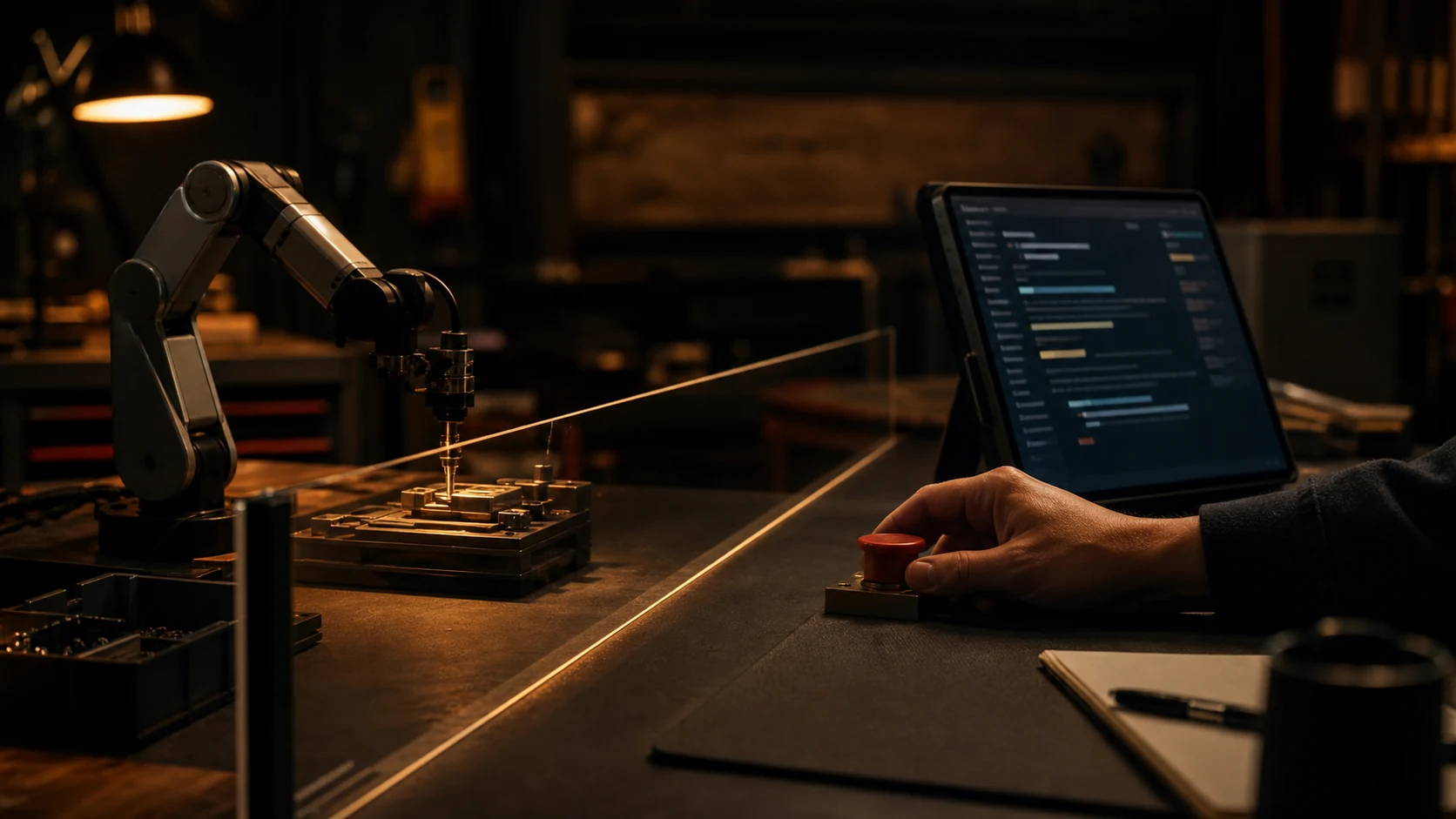
They do not say the assistant is useless. They say the assistant is powerful enough to need boundaries. A table saw is useful too. You still keep your fingers out of the blade path.
Use the assistant for speed. Use it for options. Use it for drafts, tests, comparisons, summaries, and second opinions. Let it carry the boring parts when the boring parts are clear.
But keep the gates where the cost changes:
- before production, approve direction;
- before review, demand proof;
- before release, require explicit permission.
That is how AI-assisted work stays fast without becoming a trust fall into a wood chipper.
Small gates are not there to make the agent timid. They are there to make the work honest.
Share this article
If this helped, pass it along.