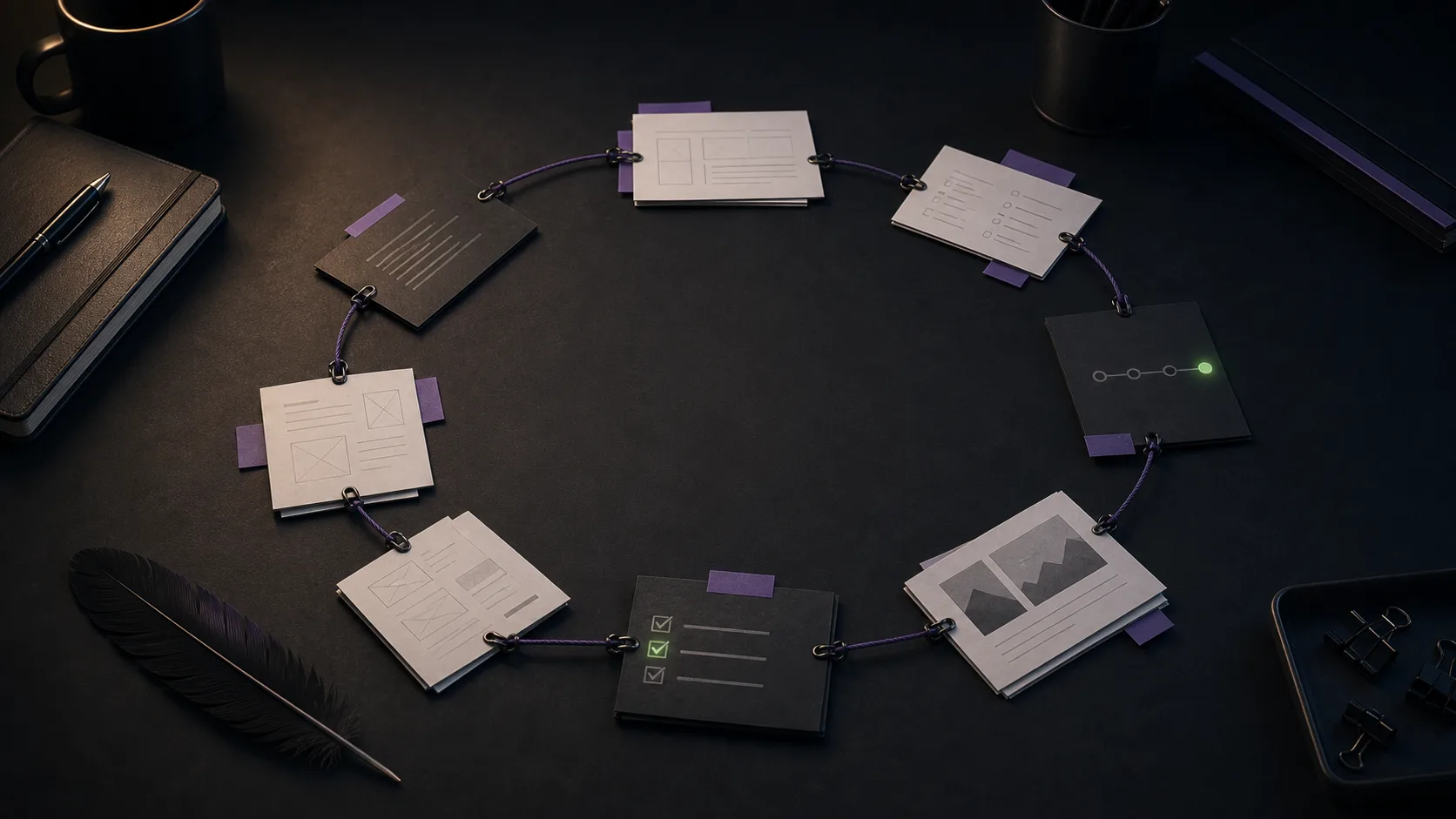
Project Tracking
Overview
Project tracking turns broad work into scoped records with acceptance criteria, notes, artifacts, and follow-up. It is useful when a task should outlive a single conversation.
Problem
Large work breaks down when decisions and follow-ups live only in a conversation. Tracking gives the work status, hierarchy, acceptance criteria, notes, and history.
Pattern
Some tasks are small enough to handle directly. Others need a record, a clear owner, acceptance criteria, review notes, and a place to capture what changed.
System
The operating model separates:
- direct work
- durable work tracking
- scoped action slices
- review and verification
- closeout notes
Build Notes
RomeoRaven itself is tracked as a structured build effort. The pattern keeps the site from collapsing into one broad task by separating content modeling, visual work, QA, and follow-up review gates.
Current Evidence
- The work was split into a parent effort and smaller reviewable work records.
- The records captured acceptance criteria, reference docs, build notes, and QA evidence.
- Follow-up work is tracked instead of being left in conversation history.
Current State
The tracking pattern is active and useful. For public pages, the important story is the habit of shaping work into scoped, reviewable, verifiable units.